

Finger tattoos
What You Should Know Before You Commit
Finger tattoos have become increasingly popular in recent years, but they're not the right choice for everyone. At Mania Tattoo Blackpool, we regularly advise customers on whether a finger tattoo is suitable for their design, lifestyle and expectations. In this guide, we'll explain the pros, the drawbacks and everything you should know before getting one.
A good tattoo artist will take the time to discuss the pros and cons of tattooing areas like your hands, neck, fingers, or feet. They’ll explain the societal perceptions that often come with these highly visible placements and highlight the natural limitations of how your body heals tattoos in these areas. You’ll also learn about the maintenance required, such as frequent touch-ups, and it’s important to ask yourself if you’re truly ready for the commitment. For instance, do you have the flexibility to take time off work to care for your tattoo properly during the healing process?
Why Finger Tattoos Are Difficult to Tattoo
Tattoo ink doesn’t sit on the surface of your skin - it’s deposited as a liquid beneath your epidermis (outer layer) and into the dermis (inner layer). This placement allows the tattoo to move and stretch with your body as it naturally regenerates. However, getting it just right is more complicated than it sounds.
The skin on areas like your fingers is thinner and more delicate than most parts of the body. Tattooing here requires precision and practice because the margin for error is so small. The artist must “float” the ink at just the right depth. If the ink is placed too shallow, your skin will shed it during its natural healing process, leaving your tattoo faded or patchy. Conversely, if the ink is placed too deep, the tattoo may appear blurry, blotchy, or bruised.
Even the most experienced tattoo artists can misjudge the perfect depth in such tricky areas, which is why finger tattoos are notoriously difficult to execute well. Involuntary twitches and natural hand movements can also make the process more challenging, even when a client is doing their best to keep still. Unlike larger areas of the body, there's very little margin for error. A line that's just a fraction too deep can spread beneath the skin over time, while a line that's too shallow may heal patchy or disappear altogether.
Why Do Finger Tattoos Fade So Quickly?
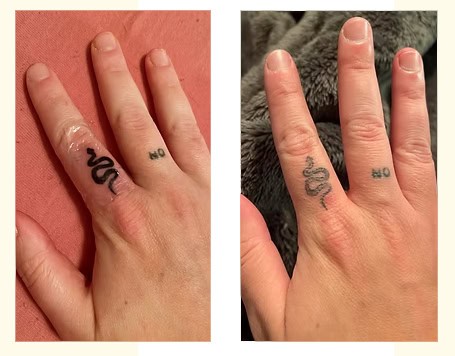
Many people are drawn to finger tattoos because they look incredible in photos or on social media. What those photos rarely show is what the tattoo looks like six months or a year later. Social media is full of freshly tattooed fingers, but very few people post photos once the tattoo has healed and naturally aged. Fresh finger tattoos can look crisp and well-defined, but they often heal very differently from tattoos on other parts of the body.
Finger tattoos face a unique set of challenges when it comes to healing. The constant use of your hands, frequent washing, and exposure to dirt and friction make it difficult to protect and care for the tattoo properly during the healing process. Following the correct aftercare advice can make a real difference, so we recommend reading our Tattoo Aftercare: Everything You Need to Know guide before your appointment. As a result, uneven fading, blurred lines and patchy ink are still common outcomes, even when the tattoo has been carried out by a skilled artist.
It’s also worth noting that while fresh finger tattoos may look sharp and bold, they often fade and distort far more quickly than tattoos in other areas. In many cases, even regular touch-ups can’t fully restore the original look, and the tattoo may eventually become impossible to fix.
Social perceptions and regret
While tattoos are becoming more widely accepted, finger tattoos are highly visible and can carry certain stereotypes. If your career or lifestyle requires maintaining a professional image, a finger tattoo could be more of an obstacle than you realise. Finger tattoos are undeniably trendy, but many people regret the decision later. Their visibility, the challenges with healing, and the need for constant maintenance often make them a source of frustration. For something so permanent, it’s important to think carefully before making a spur-of-the-moment choice.
The Mania Tattoo Approach
At Mania Tattoo Blackpool, we prioritise quality and longevity over trends, which is why we are most likely to decline requests for finger tattoos. While we may accept simple designs such as single letters or very basic symbols, more complex tattoos, such as full names, patterned bands, crowns, or micro-portraits - will be politely declined.
We also take your tattoo history into consideration. If you’ve been a loyal client for years and are already heavily tattooed, we’re more likely to consider tattooing your fingers. However, if you’re a new client and this is your first time approaching us, it’s highly unlikely that we will agree to tattoo your fingers - regardless of how much you insist, get angry, or offer to pay.
Our goal is to ensure that every tattoo we create is something you’ll be proud to wear for years to come, and finger tattoos rarely meet that standard due to the challenges they pose.
Learn more about Mania Tattoo and our approach to tattooing.
Alternatives to Finger Tattoos
If you love the idea of a small, meaningful tattoo, there are plenty of other placements to consider, such as the wrist, inner forearm, ankle or above the elbow. These placements can be discreet and stylish while giving your tattoo a much better chance of healing well and lasting for years to come. If you're ready to take the next step, our guide on How to Book a Tattoo in Blackpool explains what to expect before your appointment.
If you're still deciding whether a finger tattoo is right for you, you may also find our guide to How Much Does a Tattoo Cost in Blackpool? helpful. It explains what affects tattoo prices and why choosing the right design and placement is often more important than simply choosing the cheapest option.
If you'd like honest advice, get in touch with us.
Can Finger Tattoos Be Touched Up?
Yes, finger tattoos can often be touched up, but a touch-up isn't always the simple fix people expect. If a tattoo has faded because the ink didn't hold, a touch-up may improve it. However, if the ink has spread beneath the skin, a touch-up can't make those blurry lines sharp again. The only option is often to make the lines thicker, which can change the design completely or make small details difficult to read. That's why we always explain the long-term expectations before agreeing to tattoo fingers.
If you're looking for inspiration, take a look at our tattoo portfolio to see examples of our work.